Welcome to the BatAction Baseball Training Blog

The BatAction Blog presents baseball batting training tips, baseball hitting drills, and other information to help Bat Action owners produce unbelievable results from working out on the BatAction Baseball Trainer. Baseball coaches, players and parents will find this information very interesting and extremely useful. The Regular posts include new and innovative training drills and techniques to increase bat speed, improve power, improve hitting skill, and increase batter confidence.
Showing posts with label baseball practice plan. Show all posts

Monday, November 14, 2011

Young Youth Baseball Player Practicing on the BatAction Baseball Batting Trainer


Young Youth Baseball Player Practicing on the BatAction Baseball Batting Trainer
Uploaded by Coach2winVideos

Video shows a 7 Year Old Working Out on the BatAction Baseball Trainer. This youth baseball trainer has height and speed adjustments that make it suitable for all ages and ability. The Bat Action Machine is the perfect backyard batting trainer because it can be used alone, is fun to hit, and makes the batter learn to concentrate on the baseball. Visit the BatAction Baseball Training Blog at http://batactionbaseballtraining.blogspot.com/ Product Availabe at http://www.baseball2u.com/probamaforad.html for Just $119.95 while supplies last. http://www.Bataction.com

=======================
Thanks to our sponsors:

www.BatAction.com


---BatAction Machine at CoachesBest.com
---BatActionMachine on Ebay.com
---BatAction Machine Video Clips
---BatAction Trainer - 15 Reasons Why You Must Own This Machine
---Message to Parents From Coach Nick
---If you are looking for BatAction Replacement Balls or Power Bands Click Here

Friday, September 23, 2011

Great Baseball Hitting Drills - Using Release Zones, Picking Up Pitcher Release

Great Baseball Hitting Drills - Using Release Zones, Picking Up Pitcher Release
By guest author: Joe Brockoff

Coaches frequently ask how do we improve a player's ability to pick up the ball immediately at release point. To better understand how to do this, we first need to understand release zones. There are three pitching release zones:


1.Three-quarter release (most common): right hander-10 o'clock, lefthander-2 o'clock.
2.Overhand release: right hander-11 o'clock, left hander-1 o'clock.
3.Side arm release: right-hander-9 o'clock, left hander-3 o'clock.

After release, the ball enters trajectory, which is diagonally down. It is at this time that the hitter is completing his stride and deciding the projected location of the pitch in contact. When he is striding, he is deciding. Therefore, we need to separate the time of release from the time of trajectory, in order to give this the batter's full concentration.

Try these proven drills (we call "skull sessions") to improve a hitter's ability to pick up the ball at release point:

Needed: pitcher, batter, and netting.


1.Pitcher stands three feet in front of a net (could be the net of a batting cage).
2.Batter is on the other side of the net facing the pitcher, as if in his stance at home plate.
3.He will not take a swing.
4.Several batters can observe at the same time.

Drill:


1.Pitcher winds up and pitches the ball.
2.Ball will hit the net immediately.
3.Batter, protected by the net, concentrating solely on release, draws an imaginary circle around the release zone, and expects the ball to come out of that zone each time (zone is different for each type of pitcher).

Pitcher throws the following:


1.10 fast balls. - Batter observes release zone. - Ball will dive down after release.
2.10 breaking balls. - Batter observes release zone. - Balls will have a little hump after release.
3.10 mix of both fastballs and breaking balls. - Batter identifies each from release.

After the pitcher throws from three feet, he can vary the distance up to six feet.

Hitters will be amazed at how much better they will see release with just one session. Do this drill frequently to continue to emphasize this process, and with a variety of different pitchers.

Coach Joe Brockoff, a Division I Head Baseball Coach for Tulane University for more than 19 years, and former minor league player for the New York Yankees, has sent 45 baseball players to the pros and coached thousands of college level and youth players using his proven Super 8 Baseball Hitting System. Coach Brockoff's unique drills, tips, and techniques have increased many players' batting average by more than 200 points.

As a coach committed to continuous improvement, Coach shares his proven baseball drills, tips, and techniques here so that you will, in turn, inspire and motivate young players to improve their game. To learn more about Coach's techniques, and to watch his free instructional videos, visit the Super 8 Baseball Hitting System at http://www.learnbaseballhitting.com or check out some of his videos at http://www.5min.com/Video/How-to-Learn-Rotational-Hitting-323080216

Article Source: http://EzineArticles.com/?expert=Joe_Brockoff

============================
Thanks to our sponsors:


SoftballrUs.com/FastpitchSoftballSupply.com is the ultimate online fastpitch softball online store. SoftballrUs.com has Batting Trainers,Pitching Training, Training Bats,Defensive Training Equipment,Coaching DVDs & Books, Softball Pitching Machines, Softball Complete Net & Frame Batting Cage Packages, Batting Cage Nets, Protective Practice Screens and Nets, and BatAction Hitting Machines, and much, much more. Visit Softballrus.com now!

Tuesday, September 20, 2011

Baseball Drills to Increase Bat Speed and Hitting Power

Baseball Drills to Increase Bat Speed and Hitting Power
By guest author: Dustin Peek

Baseball drills that create head-turning power at the plate are something that every baseball player can benefit from. Sure, good hitters are known for making consistent contact with the baseball, but it doesn't take a rocket scientist to realize that the harder the ball is hit, the more likely it is to find a hole or a gap. This power at the plate is the difference in being a good hitter and a great hitter, and great hitters get noticed. Just one single extra base hit for every ten at-bats can mean the difference in a 0.200 batting average and a 0.300 batting average, and that little extra "pop" on the ball is the easiest way to get those extra hits. Power is everything, and it is well known that hitting power is created with bat speed. Luckily, there are some great hitting drills and techniques that can be used to harness this power in any player. There are two specific baseball drills that are very good at increasing bat speed and hitting power.

Before discussing these specific hitting drills, it is first important to understand how a hitter creates power. A hitter creates power through bat speed, and a hitter's bat speed is created through the efficient transfer of energy from the batter's body to the bat. Many people believe that this energy is created with the batter's arms, but in fact, this energy is created through efficiently transferring a hitter's body weight from his back foot to his front foot during the swing. The important term to remember is "efficient." Every batter that swings a baseball bat shifts his weight when swinging, but power hitters have strong cores and excellent balance. This keeps their bodies compact so that almost all of the energy created though the weight-shift is transferred directly to the bat. So the two keys to increasing bat speed and hitting power are balance and having a compact swing.

Hitting Power and Bat Speed Drill #1

This first hitting drill addresses one of the biggest problems that many hitters have when trying to hit for power. They simply do not have a compact swing. What do I mean? Weak hitters do not keep their elbows close to their bodies, and they over-stride when stepping toward the ball. This "flailing" of limbs results in a very weak swing because so much energy is being lost in the additional motion instead of being transferred directly to the bat. To transfer the maximum amount of energy to the bat, a hitter must keep his elbows close to his body and he must take a short, balanced stride. This allows the energy from the weight-shift to be efficiently transferred from the legs, up through the core, and finally to the arms. This creates the greatest amount of bat speed and hitting power.

An excellent drill for keeping a compact swing is to place small objects under the hitter's arms and between his knees while practicing hitting from a tee or during soft-toss. The objects under the arms can be anything small and soft that the hitter can hold against his body with his elbows while not interrupting his swing. Rags or towels rolled up into tubes and taped work great for this drill. The object between the knees should be a light and soft spherical-shaped object. For older players, a volleyball works great. For younger players, you might need to find some other small ball-shaped object. The idea is for the player to hold these objects under his arms and between his knees during soft-toss or while hitting from a tee to practice keeping his limbs close to his body. This drill forces the batter to have a compact swing and an efficient transfer of energy from his body to the bat.

Hitting Power and Bat Speed Drill #2

The second baseball drill to improve hitting power at the plate addresses a hitter's balance. Similar to having a compact swing, balance is critical because having bad balance also causes a batter to have poor energy transfer to the bat during the swing. We've all seen the young batter that tries to swing too hard and actually loses his balance while stepping back away from the plate. While this is a very common problem for young hitters as they try to hit the ball farther, this poor-balance approach actually prevents the batter from hitting the baseball as far as he could.

A great drill for practicing good balance is to have the hitter stand on a flat 2 x 12 inch board while hitting from a tee or while taking soft toss. This board should be about six feet in length and can be purchased at any lumber yard or most home improvement stores. The idea is for the hitter to stride directly forward toward the ball without falling off the board. Over time, this baseball drill teaches the hitter to have good balance, and it prevents stepping backward. This improved balance will absolutely improve a hitter's bad speed and hitting power.

To summarize, to improve a hitter's bat speed and hitting power, one must focus on having a compact swing and good balance. The above two baseball drills focus on these two factors, and over time, they will ultimately help a hitter improve his power. However, this only scratches the surface of improving bat speed and creating power at the plate. If you are interested in further improvements, I encourage you to keep learning about this incredibly important baseball skill!

Do You Want To Learn Even More About Baseball Drills To Increase Bat Speed And Hitting Power? Whether You Are A Player, A Coach, Or A Parent, You Can Learn Exactly How To Start Crushing The Baseball Today Without Any Expensive Equipment Or Hitting Camps. Click On The Following Link To Discover The Most Effective Program Ever Created To Increase Your Hitting Power!
http://www.BatSpeedandHittingPower.com

Article Source: http://EzineArticles.com/?expert=Dustin_Peek

=========================
Thanks to our sponsors:

Baseball2u.com/CoachesBest.com is the ultimate online baseball training and coaching store. With over 1400 products organized into categories Baseball2u.com makes finding that baseball training product easy and simple. Order securely online or by phone. Baseball2u.com is a fully licensed company and has a full time staff available from 8:00 to 5:00 CST. Their toll free customer service number is 1-877-431-4487.

The Categories they have are: BatAction Hitting Machines, Hurricane Hitting Machines, Batting Cages, Pitching Machines, Jugs Equipment, Game and Practice Baseballs, Protective Practice Screens and Nets, Portable Pitching Mounds, Baseball DVDs & Books, Clearance Items on Sales, NEDCO Bataction Replacement Parts, Baseball Training Equipment, Youth Baseball Training Equipment, Training Bats, Pitching & Throwing Trainers, Defensive Trainers, SKLZ Hurricane Replacement Parts and Much Much More! Visit Baseball2U.com today!

Friday, September 16, 2011

The Physical Demands of Baseball

The Physical Demands of Baseball
By guest author: Dana Cavalea

As we spend time analyzing sports, every sport has its own set of physical, mental, and skill demands. For years and years now, football has been the gold standard when comparisons start taking place in regards to overall athleticism need to play, as well as the overall physical demand. For this very reason there are so many young athletes, as well as older athletes that are integrating football lifting techniques, as well as conditioning techniques into sports such as baseball.

In the past when I would hear and see this taking place, the excessive grunting, yelling, and weight handling I would cringe. But, after taking a deeper look at what is actually going on, it turns out that there is a lot of hard work and internal drive and personal limit pushing taking place. Putting exercise selection and form aside, this type of increased intensity training is achieving a quality that is often times overlooked, fitness.

Because baseball is a sport that has very low metabolic and physical demands, athletes learn to adapt to their sport. Some athletes even play baseball because it has such low physical demand. Over time, this will lead to athletes that become very proficient and sport-specific skills, such as hitting and throwing, but often health and fitness levels are severely lacking. When these fitness levels start to lack, injuries often result due to the high velocities and torques that are needed to execute the sport-specific skills. Throwing a baseball is one of the most explosive, total body actions in all of sports, yet many pitchers are overweight and inherently lazy.

If as coaches and athletes we really stop and analyze this situation, can you say that you and your team are honestly doing enough in regards to stay lean? Over the years I have heard about Coaches running their athletes with excessive distance running, and again I would get sick to my stomach. Although distance running isn't a specific protocol to baseball, it will without a doubt work to increase caloric burn, which will lead to the shedding of excessive body mass. I still wouldn't recommend excessive running everyday, but I would require some type of conditioning everyday. I would also recommend that these circuits are primarily cardiovascular based rather than being strictly weight lifting oriented. These circuits could include medicine balls, body weight training, form running, jump rope, plyometrics, band work, core work, etc.

The great advantage to a circuit is that they work great for teams. Circuit training allows you to create multiple stations, each station containing a different exercise, and accommodates multiple athletes, as well as providing a good amount of variety. Circuits can be done for reps, or for time. After that athlete achieves the specified reps, or the allotted time, he would then move to the next station. When choosing stations, just like when designing and overall program, you must have a goal. If your goal is strength, then your circuit would be primarily weight training oriented. If your goal is cardiovascular fitness/ endurance and strength, you would select a variety of exercises that contain either cardio fitness, strength, or both.

I have become a huge advocate of circuits in-season because they are time efficient, will work to maintain and hopefully increase work-capacity of the body, and are fun.

Although the physical demands of baseball are extremely low, athletes that spend time increasing their work capacity are at a tremendous advantage in regards to recovery time, as well as a decreased time on the disabled list. Increasing work capacity will allow pitchers to pitch deeper into games, while keeping position players strong throughout the rigors of playing everyday. The gold standard of workouts in the Major Leagues has been Roger Clemens and his legendary SEAL Program. This program is basically one giant circuit. This program is not extremely focused on weigh training in the circuit, but on increasing conditioning levels. This program is a combo of distance and sprint work, as well as lateral work with baseballs.

Take a lesson from the Rocket, don't be a typical lazy baseball player that just gets by because of the low demand of the sport, but learn to out-work the demands of the sport and you will be rewarded by health, efficiency, and most importantly increased performance.

Dana Cavalea is a Sports Performance Consultant specializing in baseball performance training. In addition he works with many professional sports teams, athletes, and colleges' educating on the importance of training, nutrition, and lifestyle for sport.In addition he is the owner of Major League Strength, http://www.mlstrength.com, a sports performance consulting company designed to educate and create awareness on advancements in the field of sports performance training for coaches and athletes.

Article Source: http://EzineArticles.com/?expert=Dana_Cavalea

==========================
Thanks to our sponsors:


SoftballrUs.com/FastpitchSoftballSupply.com is the ultimate online fastpitch softball online store. SoftballrUs.com has Batting Trainers,Pitching Training, Training Bats,Defensive Training Equipment,Coaching DVDs & Books, Softball Pitching Machines, Softball Complete Net & Frame Batting Cage Packages, Batting Cage Nets, Protective Practice Screens and Nets, and BatAction Hitting Machines, and much, much more. Visit Softballrus.com now!

Tuesday, August 9, 2011

Little League Baseball Drills - Batting Practice

Little League Baseball Drills - Batting Practice
By guest author: Chris Campbell

I have heard it said by many an accomplished athlete, that one of the hardest things you can do in professional sports, is to hit a major league fastball. Or any major league pitch for that matter. Just ask Micheal Jordan. He may be a living legend in the world of professional basketball, but he only managed a 202 batting average for the Birmingham Barons (a farm team for the Chicago White Sox). The moral being, it's best to get your little leaguer started early, if they plan on challenging some of the MLB hitting records.

With that in mind, lets consider a few hitting drills that the kids can use to get their bats swinging true, and making contact as soon as possible. One of the best drills you can do with your kids, is simply to grab a bucket of balls, and pitch a few to them every day you can find the time to do so. It's practically impossible, for most kids to get enough batting practice with the team. There's a limited number of pitchers, catchers, and backstops for most little league coaches to work with. It's almost impossible for them to get more then a few minutes hitting each practice. A one on one practice with mom or dad every day or so will really help out.

Now just swinging for the sake of swinging will make you a better hitter, but there are a few simple points you should keep in mind, to maximize the time put in. Don't harp on these items too much, as they can be a bit technical and boring for kids. Try to make it fun for them at the same time.

Choosing The Right Bat

Picking a bat that's appropriate for your child's height and strength can make all the difference. It should feel comfortable for them to hold and swing the bat. If the bat is slowing down their swing too much, it's probably a little too heavy. There is a simple way to test a bat, even before you buy one. Simply have your son or daughter hold the bat by the handle, and hold it straight out to the side, so the bat is parallel to the ground. They should be able to hold the bat steady for at least fifteen seconds. If they can't, or their arms starts to shake, you should try a smaller bat.

Batter Positioning

It's important to know where the batters box is, where home plate is, and where the strike zone is. That way, even little league players, can put themselves in good position to reach any ball that is passing through the strike zone. Even if your in your back yard practicing, you can mock up a plate, and batters box. Just use a can of spray paint on the grass to mark out home plate and a made up batters box. Don't worry, it'll disappear the next time you cut the grass.

Little League Baseball Drills is a great resource for helping your little leaguer get the most out of his or hers favorite pastime. With a little good training, amateur or even professional ball players will see a dramatic improvement in the way they play.

Article Source: http://EzineArticles.com/?expert=Chris_Campbell

========================
Thanks to our sponsors:


SoftballrUs.com/FastpitchSoftballSupply.com is the ultimate online fastpitch softball online store. SoftballrUs.com has Batting Trainers,Pitching Training, Training Bats,Defensive Training Equipment,Coaching DVDs & Books, Softball Pitching Machines, Softball Complete Net & Frame Batting Cage Packages, Batting Cage Nets, Protective Practice Screens and Nets, and BatAction Hitting Machines, and much, much more. Visit Softballrus.com now!


Friday, November 12, 2010

Routines in Baseball

Routines in Baseball
By guest author: Rick Harig

Baseball is the most "in and out" game there is in sport. A baseball player goes from live to not live between 140 and 170 times per 9-inning game. Some positions, like pitcher and catcher, force the player to be in focus more often. However, they, as well as the other 7 players on a field, can benefit from techniques to transition from "in" to "out" and back to "in" mentally. Each player needs to establish routines that allow him to be "on" every time he is suppose to be. The "off" time is a time when these routines are set into place. Routines allow the brain to go from the left brain's organizing and setting up to the right brain's action and follow through. These routines are like triggers. They put the player in the proper mindset. Players should study other player's routines to get ideas for what may help them.

Vision Routines

The hitter needs to develop a vision routine. The eyes work best when binocular (using both eyes), when on a horizontal plane, and when used in a scanning fashion. A hitter should develop a vision routine that works for him. Ex.: the hitter looks at the pitcher's feet and when they move, his eyes move to the pitcher's hat. At that point, the eyes move again when the pitcher's arm comes into the release slot. The hitter's eyes jump (scan) once again to the ball where they begin to track it in a lane to the hitting zone. The length of time one can intensely concentrate, like needed in hitting, is about one second. Since an 85 mph fastball takes about.5 seconds to get to the plate upon release that means the hitter has to start concentrating.5 seconds before that, which is when the ball is coming up into the release slot. If a hitter starts to concentrate too finely too soon he will end up seeing the ball only in his peripheral vision. A vision routine guarantees that a player uses his eyes as scanners and does not lock into his fine concentration until the appropriate time.

Breathing Routines

Hitting, pitching and defense can benefit from a breathing routine. Proper breathing is a trigger for the body to relax, which can put the mind into a proper mindset. An example of a trigger is when you are listening to a CD or iPod play list that you have heard many times. You automatically know the next song in the sequence. You often start singing it or hearing it before it actually starts. This is a trigger. The last song triggered the next song in your head. In baseball, the player needs to plan these triggers in a conscious state (a routine) and then allow them to be carried out unconsciously. The breath, as a trigger, should come from deep down in the diaphragm. The breath feels like it is coming from the stomach. A breath through the mouth results in an upper chest shallow breath. A proper breath oxygenates the brain and the muscles better than an upper chest breath. This is because there is more blood in the bottom of the lungs and when the breath gets oxygenated better it does better things for the central nervous system. The two types of breathing create two different results. Upper chest breathing during performance stimulates the fight or flight mechanism. This emergency state of mind causes the body to produce stress chemicals like adrenaline and lactic acid. In contrast, if oxygen is pulled more deeply through the lungs via nasal breathing a calming relaxing feeling takes place. This is because this type of breathing triggers impulses in the body's parasympathetic nervous system. Breathing is the bridge between the body and the mind. Your brain weighs about 2% of your overall body weight, but takes 20% of your oxygen.

Pitcher's Routines Pitchers need to develop routines that put them into the right frame of mind. More on this can be found in the pitching section in section 8. Routines, including breathing ones, can help create the conditioned responses that were discussed in section 6. An example of a pitcher's routine - while standing on the rubber, take a deep breath through the nose slow, deep and calmly. Let it out as you get your sign and location. Then imagine the lane you are going to throw in. Blacken out around it, and see a trail of balls going precisely down that lane into the catcher's glove. Follow with the real pitch to the same spot. Some pitchers use self-talk to design their routines around. Remember the mental message can dictate the physical action. The dirt circle is a good place for positive self-talk. If you, as a pitcher, find yourself talking negative, get out of the dirt and say anything you want to yourself. Then get back in and start your positive routine. "I am coming at you; get ready for my stuff..."

Hitter's Routines - Hitter's routines often start with quality uninterrupted on deck time to study the pitcher and reflect on what he is about to do. Then the routines progress to the actual at bat. There are so many different ways to get into the right frame of mind. An example of using Positive Image Flashes (PIF's) - First, start with a vision routine like described before. While waiting for the pitcher to move his feet, visualize a pitch coming down the lane and seeing it being hit exactly where you want it to go, like up the middle. Then when the pitcher moves his feet, continue with your vision routine to put yourself in the best position for it to really happen. There are a lot of routines that have body actions that help a hitter relax and get into the right frame of mind. Ever watch a cat pounce on a mouse or some toy? It crouches down and then slowly wags it tail giving itself timing and readiness. Then the cat quickly strikes at its prey. This is a great example of a routine. Hitters often wag their bats much like the cat's tail. Just like the pitcher can use the dirt circle of the mound to talk positive or negative, so can the hitter use the dirt circle around home plate or use the batter's box itself.

Fielder's Routines - Fielders need routines to take up all of the dead time between pitches. These routines should be designed keeping two things in mind. One, a routine that allows for focus and movement right before the pitch, and two, some sort of planning stage when the ball is not in play. An example of a fielder's routine - Have an imaginary circle that can be placed anywhere you desire depending on the situation. When you walk out of this circle it triggers the planning stage. Quickly figure out all the possible scenarios and what you will do with the ball. Walk back into the circle, which represents your unbeatable zone. When you are in that circle you are unstoppable. You take every ground ball personally. If 27 balls were hit to you, you would make 27 outs and win the game. This circle makes you super-human every time you step into it. You suddenly feel quicker and more ready.

For more on routines check out The Cognitive Advantage Program's website!

Copyright Rick Harig - All Rights Reserved

Article Source: http://EzineArticles.com/?expert=Rick_Harig

================
Thanks to our sponsors:

=======================================
Derek Jeter Hurricane Hitting Machine
=======================================

Derek Jeter Hurricane Machine Training Blog

HurricaneMachine.com - Links

---15 Reasons To Buy a Hurricane Trainer
---6 Questions Often Asked By Customers
---Message to Parents From Coach Nick
---Hurricane Hitting Machine Drills
---20-Minute Hurricane Batting Practice Workout
---Hurricane Hitting Machine Video Demo Clips

Baseball2u.com has a one of the internet's largest selections of baseball coaching and training dvds

Monday, October 11, 2010

How to Create a Baseball Practice Plan

How to Create a Baseball Practice Plan
By guest author: Jack Perconte

There are basically two things to consider when talking about how to create a baseball practice plan. The first is the pre-season practice plan and the second is the in-season plan. Of course, for teams that may play or stay together year round, there may be an off-season practice plan, too.

First, let's consider the pre-season plan. Coaches should decide how many practices a week they are going to have, which is usually based on the age of players and the philosophy of the level the team is playing. For example, travel baseball teams should practice more often than recreational teams, especially before the season. It may become more difficult for travel teams to practice as much once the season begins because of the greater number of games. With that in mind, travel teams must take advantage of their preseason practices more.

Additionally, coaches will base how in-depth strategic instruction they are expected to provide based on the level of play. For instance, recreational coaches should devote more time into the basic fundamentals, where as travel coaches should go into advanced detail on the finer points of the game, like pick-off plays, etc...

Following are suggestions that coaches should consider when drawing up their pre-season practices:
1. Write down every phase of the game including the fundamental skills of hitting, throwing, fielding, pitching and base running.
2. Write down every strategic game situation elements of the game like cutoffs and relays, run downs, pick-off plays, bunt plays and double steal situations, etc.
3. Decide on the length of practices and then begin to plug in the amount of time that will be devoted to a) fundamentals, b) strategic elements. After allowing a 15-minute warm-up period at each practice, below is some examples based on two-hour practices.

****** Fundamental Skills - Strategy, Game Situation
Practice 1 - 45 minutes --- 1 hour strategic
Practice 2 - 50 minutes -- 55 minutes
Practice 3- 55 minutes -- 50 minutes
Practice 4 - 1 hour -------- 45 minutes
Practice 5 - 1 Hour -------- 45 - Simulated Game
Practice 6 - 45 minutes--- 1 Hr - Simulated Game
Practice 7- 45 minutes -- 1 Hr - Intra -squad
Practice 8 - 45 minutes --- 1 Hr - Intra squad

Of course, this is just a basic model that coaches can go by with the goal of dividing practice time between the fundamental skill work and the strategic game work. Initially, less skill work is recommended until players get their arms and bats in shape, before devoting more time to this skill work. Coaches can adjust and vary their plan to meet their teams needs.

Other points to consider:
1. Homework on skill work should be given at the end of each practice.
2. As practices progress, coaches should gear more time towards the areas of baseball that are needed most. For example, extra base running work for teams that show bad base running skills.
3. Simulated games are when coaches set up certain game situations with regular pitcher, hitter and fielders, etc...
4. Attention to detail during warm-ups should not be neglected.
5. Keeping kids as busy as possible with small group stations and rotations is good when coaching help is available for the various stations.
6. The advantage of simulated games is that certain situations can be worked on over and over again. Reenacting plays that are done incorrectly until players do it correctly is crucial to improvement.

In season practice plan:
1. As games begin, periodic reviews of all strategic game situations should be done.
2. Coaches should use their pre-game time wisely to stay on top of skill work.
3. Practices can now be geared towards the areas of the game that teams need the most based on their recent game deficiencies.
4. Coaches are responsible for protecting pitchers arms at practice, especially as the season progresses.
5. Skill work should not be taken for granted as the season progresses. It is common for hitters to get off to a good start after working on hitting drills in the off- season only to have their hitting deteriorate when they neglect the hitting drills as the season progresses.
6. Cutting down on the length of practices may sometimes be necessary during the hot summer months so players do not get run down physically.
7. Coaches should take notes during games as to what their team should concentrate their next practice on.

Of course, being organized and prepared for every practice is important for successful baseball practices. Finally, a major sign of a good coach is that their team is better at the end of the season than at the beginning. This may not always show up in the win column, but definitely in how teams execute the strategic aspects of the game.

Former major league baseball player, Jack Perconte gives baseball hitting tips and batting practice advice for ballplayers of all ages. His baseball playing lessons, books and advice can be found at http://www.baseballhittinglessons.com/baseball.

Jack is the author of two books, The Making of a Hitter and Raising an Athlete - his positive parenting advice and books can be found at http://positiveparentinginsports.com

Article Source: http://EzineArticles.com/?expert=Jack_Perconte

=================
Thanks to our sponsors:
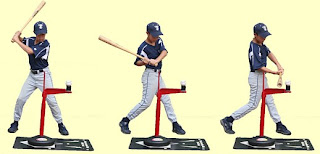


Thanks to our Sponsor: Advanced Skills Tee

AdvancedSkillsTee.com
Advanced Skills Tee at Baseball2u.com
Advanced Skills Tee Reviews
Advanced Skills Tee Product Description
Used By Over 1,200 High Schools and Colleges!